


Latest News


Feature Column
- Publish Date:2026-09-23
NYCU Presidential Education Award Recipient Hsu Hung-wei Puts AI to Work for Others
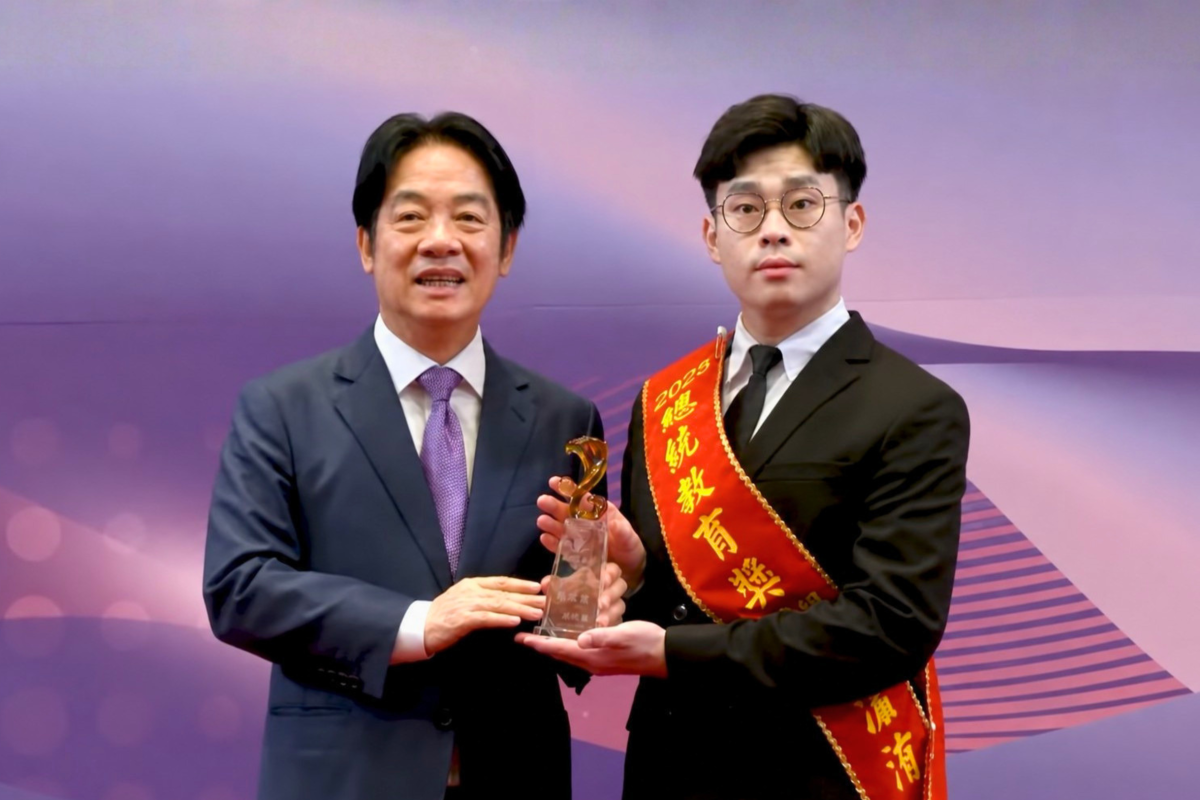
NYCU doctoral student Hsu Hung-wei (right) receives the 2025 Presidential Education Award
Source: Central News Agency / Fokus Taiwan
By Chance Lai
______
An artificial intelligence system deployed at a pig farm in central Taiwan is helping farmers spot potential health problems before they spread through the herd. Behind the technology is Hsu Hung-Wei (許汯洧), a doctoral student in the Department of Electrical Engineering at National Yang Ming Chiao Tung University (NYCU), whose research and personal journey were recently featured by Fokus Taiwan, the Indonesian-language news platform operated by Taiwan’s Central News Agency (CNA).
Using image analysis, the system monitors indicators such as animal movement and temperature to identify pigs that may be sick or weak, enabling farmers to respond earlier and reduce the risk of disease transmission. The project is one example of how Hsu is bringing AI out of the laboratory and into settings where it can address practical industry needs.
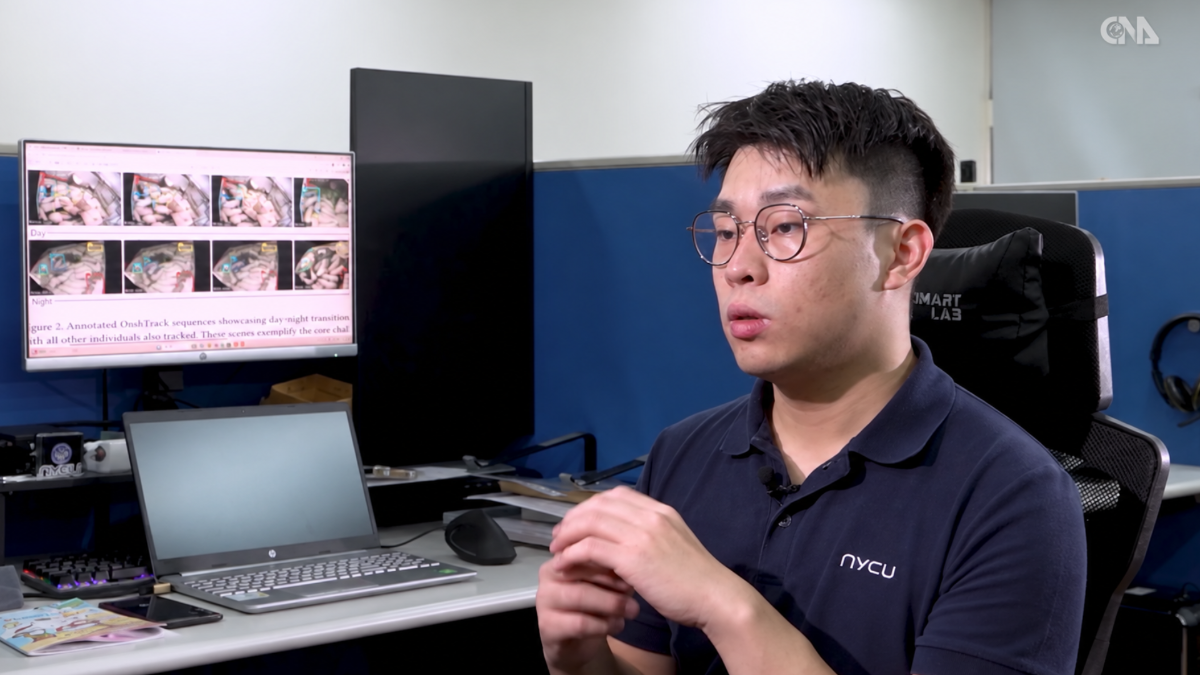
NYCU doctoral student Hsu Hung-wei discusses his academic journey and AI research in an interview with the Central News Agency. (Photo credit: Fokus Taiwan)
Bringing AI Into the Real World
Hsu has participated in 13 research and development projects, spanning areas including visual epilepsy detection, thermal-image recognition and AI calibration. His work has also resulted in international journal and conference papers as well as a U.S. patent application, according to NYCU’s College of Electrical and Computer Engineering. The smart livestock project reflects a recurring theme in his research: using emerging technologies to solve problems beyond the laboratory.
At a pig farm in Yunlin County, Hsu helped develop an AI-based monitoring system that analyzes visual and thermal information to flag animals showing signs of abnormal health. Early detection can allow farmers to isolate potentially sick animals sooner, limiting the possibility of wider outbreaks and the economic losses that can follow. For Hsu, the value of AI lies not simply in improving algorithms, but in finding applications that can make a difference in people’s lives and industries.
That approach has extended beyond agriculture. Earlier projects included AI and thermal-imaging technologies developed for health monitoring and epidemic-prevention applications. NYCU said his research experience has ranged across computer vision, thermal sensing and AI-assisted systems.
A Journey Between Taiwan and Indonesia
Technology is only part of Hsu’s story. Raised in Donggang, Pingtung County, Hsu is the son of an Indonesian-Chinese mother and a Taiwanese father. He told CNA that childhood trips to Indonesia with his mother remain among his most vivid connections to the country and its culture.
His educational path was far from straightforward. Hsu has spoken publicly about difficult periods following the loss of his mother and his experiences of bullying while growing up. With support from his family and teachers, he gradually rebuilt his routines, returned his focus to his studies and became increasingly involved in research. The experience eventually became part of a much broader academic journey — one that took him from electrical engineering studies into doctoral research at NYCU and increasingly toward the question of how technology can be used for social good.
His story also gives the Fokus Taiwan feature particular resonance for Indonesian-speaking audiences. Rather than presenting cross-cultural identity simply as a matter of background, the report connects Hsu’s family history, education and research to the growing links between Taiwan and Indonesia.
Recognition Through the Presidential Education Award
In 2025, Hsu received Taiwan’s Presidential Education Award, which recognizes students who demonstrate perseverance in overcoming adversity while pursuing education and contributing their talents to society.
He was among 10 recipients in the university and college category that year. The award was presented on July 4, 2025, alongside honors for students from elementary school through higher education.
For Hsu, however, recognition has not meant the end of the journey. Speaking with CNA, he said he remains open to either an academic or industry career, but hopes to continue pursuing projects that create tangible benefits for society. In June, he also taught an AI course for children in a rural area of Kaohsiung, extending his interest in technology from research to education.
Research With a Social Purpose
Hsu’s story illustrates how the impact of university research can extend well beyond publications and laboratories. An AI system used on a farm can help protect livestock and support farmers. A technology researcher can also become an educator, bringing new tools to students who may otherwise have limited access to them. And a researcher raised across different cultural influences can help connect Taiwan’s scientific community with audiences far beyond its borders.
The Fokus Taiwan feature brings that story to Indonesian-speaking readers, offering an international audience a closer look at a young researcher at NYCU through both his scientific work and his personal experience.
For Hsu, the next step is still taking shape. But the direction is clear: continuing to explore how artificial intelligence can respond to real-world needs — and how technology can ultimately serve the communities around it.
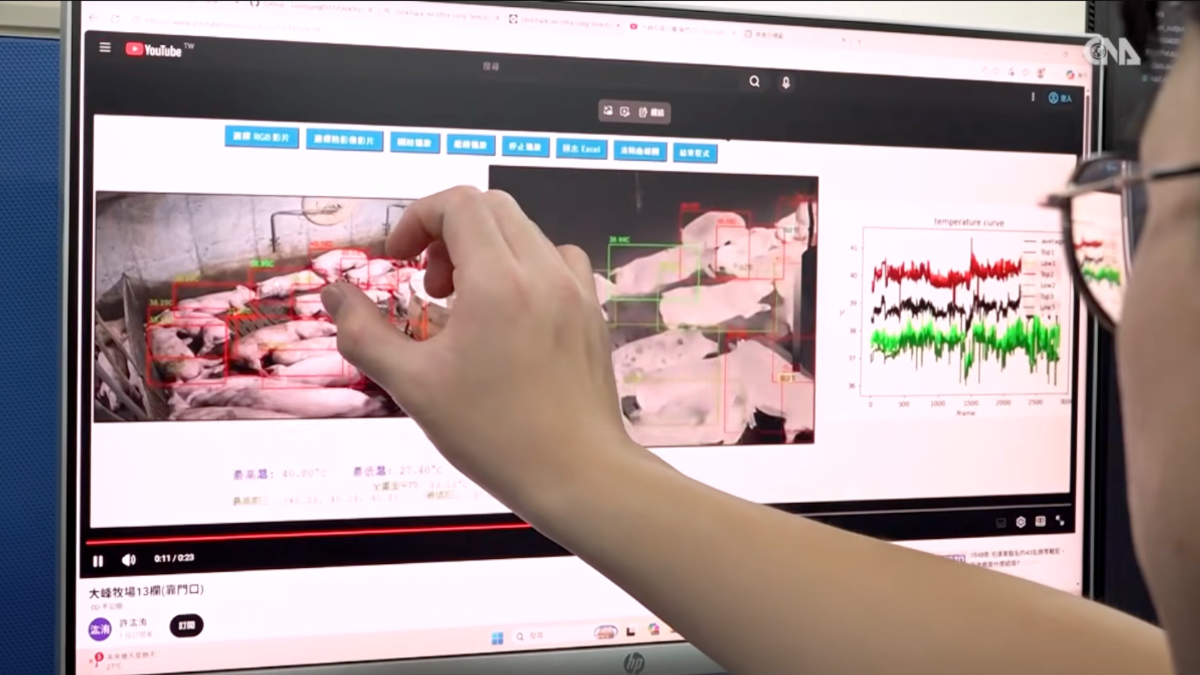 An AI-powered pig monitoring system developed by Hsu Hung-wei helps farmers detect early signs of illness in pigs. (Photo credit: Fokus Taiwan)
Related Image(s):
