Latest News

  • Feature Story

  • Publish Date:2026-09-24
NYCU-TVGH Team Explores a New Strategy for Periodontal Regeneration
NYCU faculty, staff and students gather for the 2026 freshman convocation, welcoming approximately 2,000 incoming undergraduates to the university community.
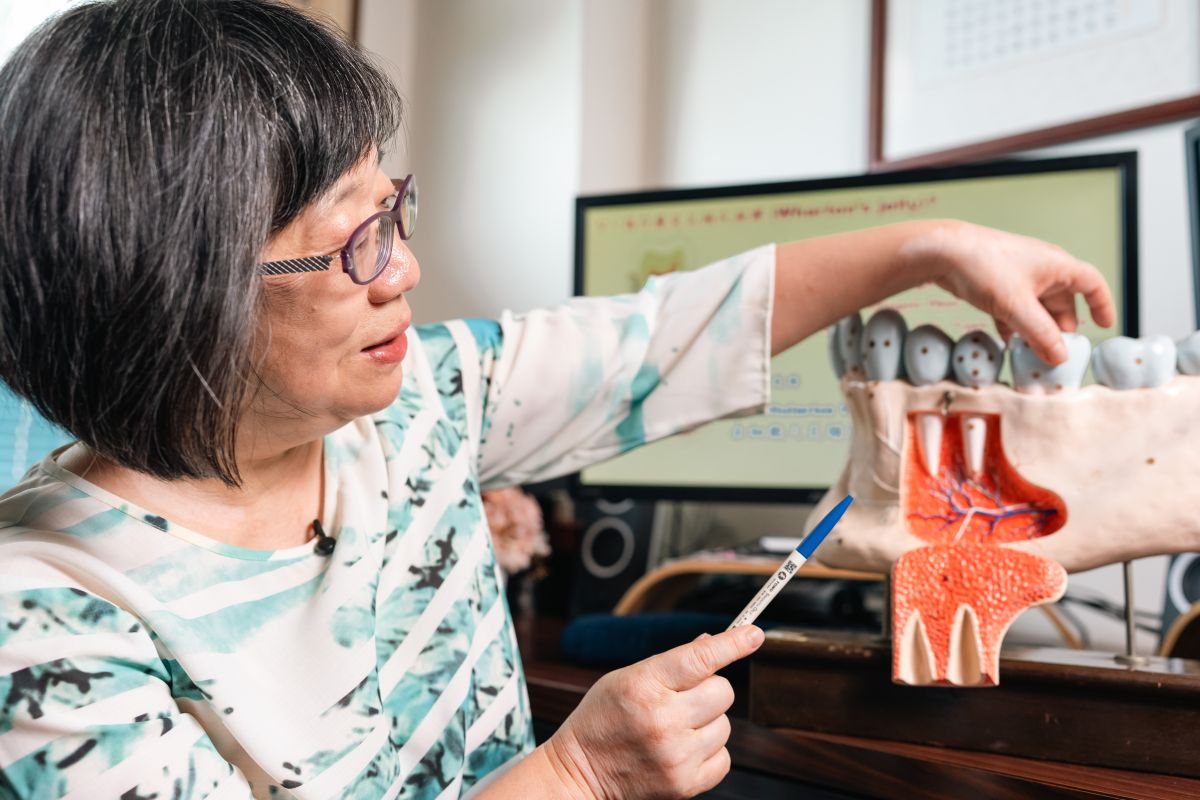
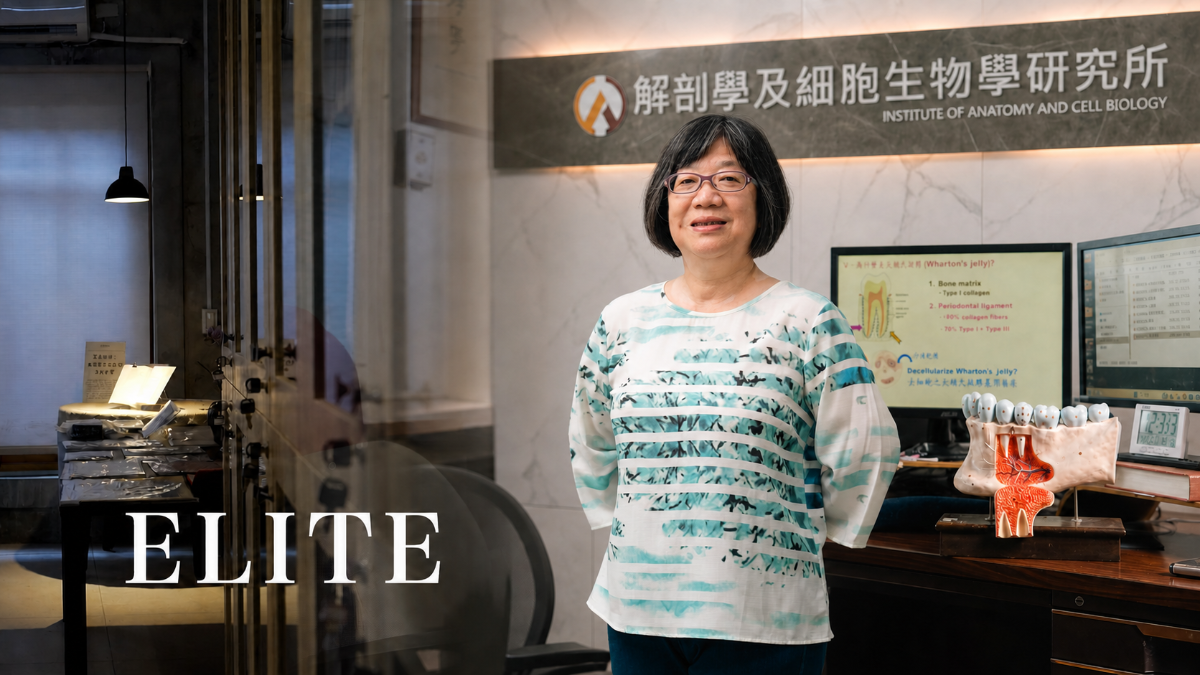
Professor Yu-Show Fu introduces the NYCU-TVGH team’s research on using decellularized Wharton’s jelly as a cell-free scaffold that may stimulate bone regeneration and periodontal ligament renewal in a preclinical animal study. © NYCU ELITE
 
By NYCU ELITE
______
Advanced periodontal disease affects more than 1 billion people worldwide, according to the World Health Organization. A joint research team from National Yang Ming Chiao Tung University (NYCU) and Taipei Veterans General Hospital (TVGH) has developed a decellularized natural matrix derived from Wharton’s jelly in human umbilical cords. In a rat model of periodontal defects, the matrix appeared to stimulate bone regeneration and periodontal ligament renewal, suggesting a potential strategy for restoring both types of tooth-supporting tissue at the same time.

Stimulate Bone Regeneration and Periodontal Ligament Renewal

Periodontal disease damages the alveolar bone and periodontal ligament that support the teeth. As the disease progresses, periodontal pockets deepen, alveolar bone is lost, and teeth may gradually loosen or even fall out. Current treatment for moderate to severe periodontal disease may involve flap surgery together with bone graft material or regenerative membranes to promote tissue repair. Yet reliably rebuilding both alveolar bone and periodontal ligament within the same defect remains a major challenge in periodontal regenerative medicine.

Seeking a new materials-based strategy, Professor Yu-Show Fu of NYCU’s Institute of Anatomy and Cell Biology collaborated with Cheng-Fong Chen of the Department of Orthopaedics, Wen-Liang Lo of the Department of Stomatology, and Chang-Ching Yeh of the Department of Obstetrics and Gynecology at TVGH. The team freeze-dried and decellularized Wharton’s jelly from human umbilical cords, preserving its extracellular matrix to create a natural scaffold containing no living cells.

Wharton’s Jelly Provides a Natural Environment for Cell Growth

Wharton’s jelly surrounds the blood vessels of the umbilical cord and is rich in hyaluronic acid, collagen, and other extracellular matrix components. The team’s analysis found that the decellularized Wharton’s jelly matrix (WJD) retained a three-dimensional porous structure that can support cell migration, attachment, and growth. Because the material contains no living cells and does not require stem cells to be added during implantation, it may ultimately offer greater flexibility than cell-based therapies in storage, transportation, and manufacturing.
Nobel laureate in chemistry Professor Arieh Warshel shares stories from his formative years with incoming students.
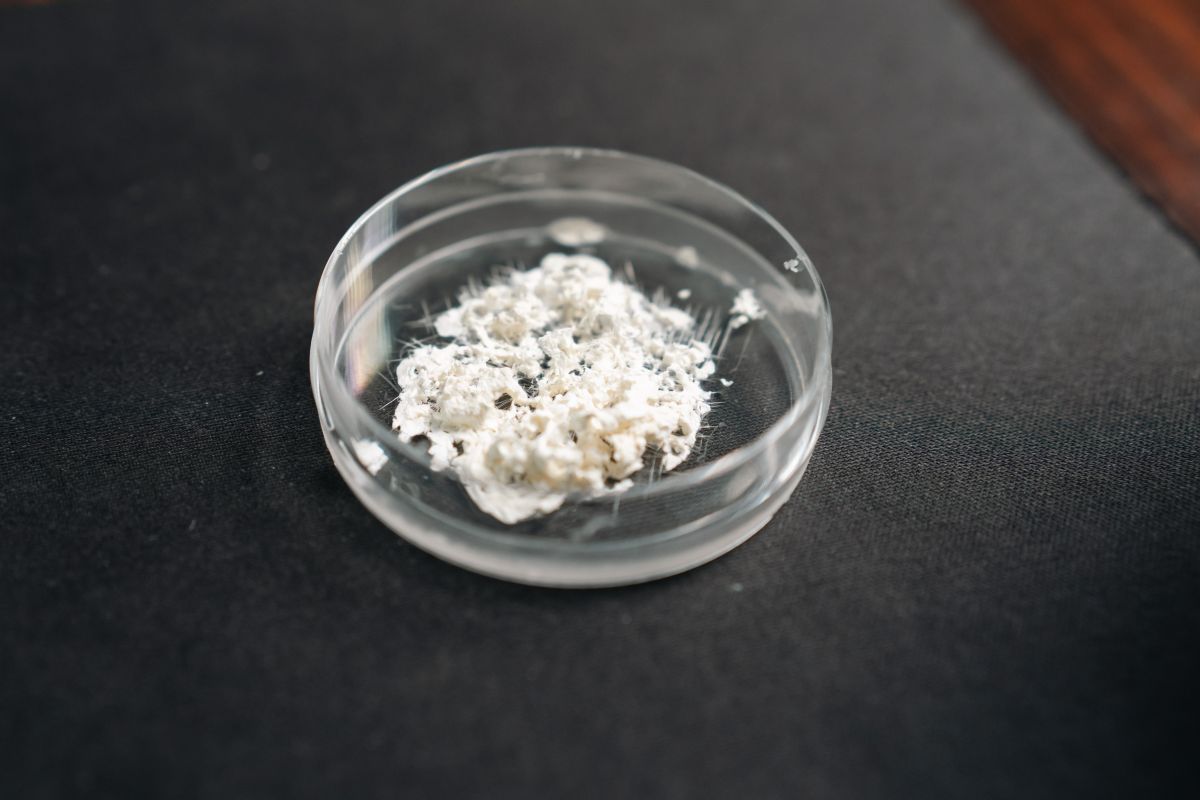
A sample of the freeze-dried, decellularized Wharton’s jelly matrix developed as a natural, cell-free scaffold. © NYCU ELITE

A Rat Model Offers Early Evidence of Regenerative Potential

The researchers created defects affecting the alveolar bone and periodontal ligament around the mandibular molars of rats, then implanted WJD. According to the team’s animal-study results, new bone formation and periodontal ligament repair were observed in the treated areas without the addition of stem cells or bone graft material. Both types of tissue repair were more pronounced than in the control group. The significance of the result lies not only in promoting bone growth, but also in the simultaneous repair observed in the periodontal ligament.

Located between the tooth root and alveolar bone, the ligament anchors the tooth and cushions it during biting. If further preclinical models and human trials confirm the material’s safety and effectiveness, it could offer a new option for periodontal tissue regeneration and for managing bone defects before dental implant placement.


From Umbilical Cord Research to Cell-Free Regenerative Materials

Fu has studied umbilical cords and regenerative medicine for more than two decades. Her early work focused on the potential of umbilical cord mesenchymal stem cells in areas including neurodegenerative disease, pulmonary fibrosis, and tissue repair. In recent years, her team has also explored ways to transform umbilical cord tissue into biomaterials containing no living cells. Since 2018, the researchers have studied bone repair and later applied WJD in a model of periodontal defects.

An incoming student uses a smartphone to take part in an interactive session during NYCU’s freshman convocation.
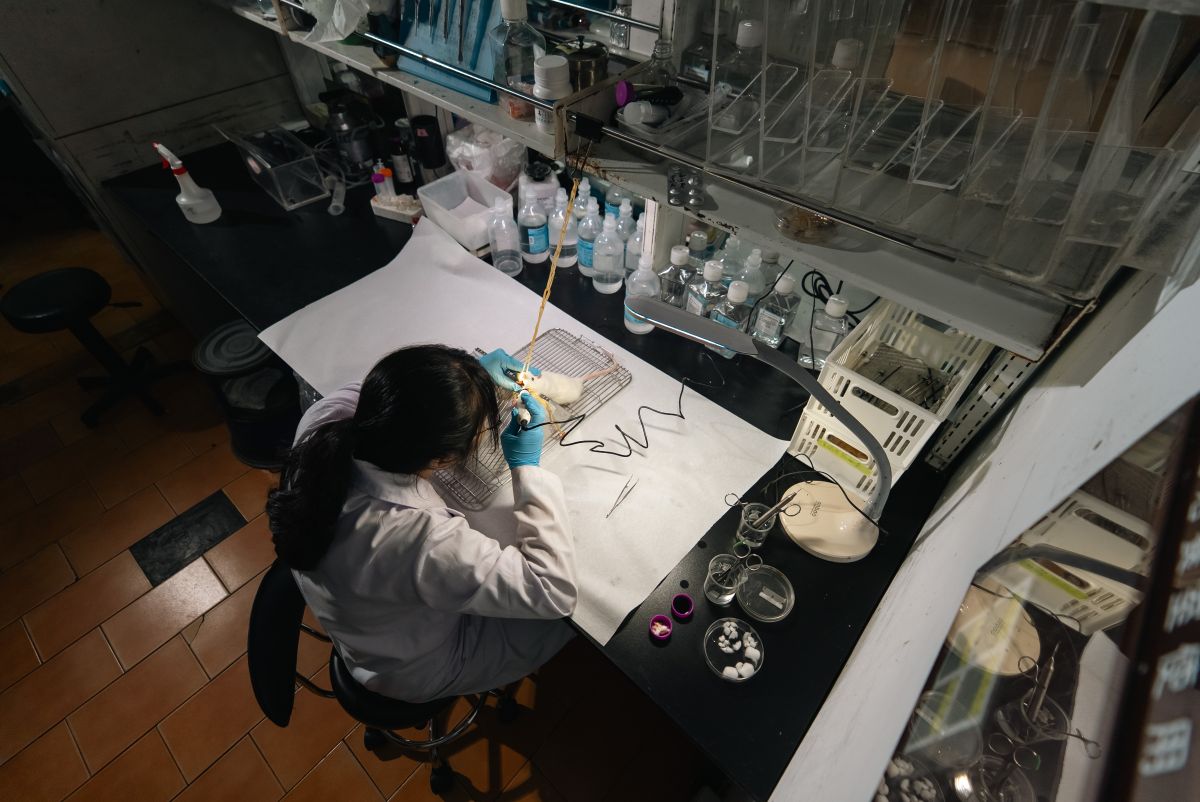
A researcher performs an experimental procedure in the team’s preclinical rat model of periodontal defects. © NYCU ELITE

The team’s related findings were published in Biomaterials Science and selected as a journal cover story. The researchers have obtained a Taiwan patent and are pursuing international patent protection, with the goal of establishing methods for material preparation, quality control, and scaled-up production.

In the next phase, the team will continue to evaluate repair across periodontal defects of varying severity, the possibility of combining WJD with bone graft material, and the material’s long-term safety, immune response, and manufacturing consistency. Fu emphasized that the ultimate aim of the research is to address clinical needs. Moving from animal studies to use in people, however, will require rigorous preclinical testing, regulatory review, and human clinical trials.

The cheerleading squad delivers an energetic performance at the freshman convocation.
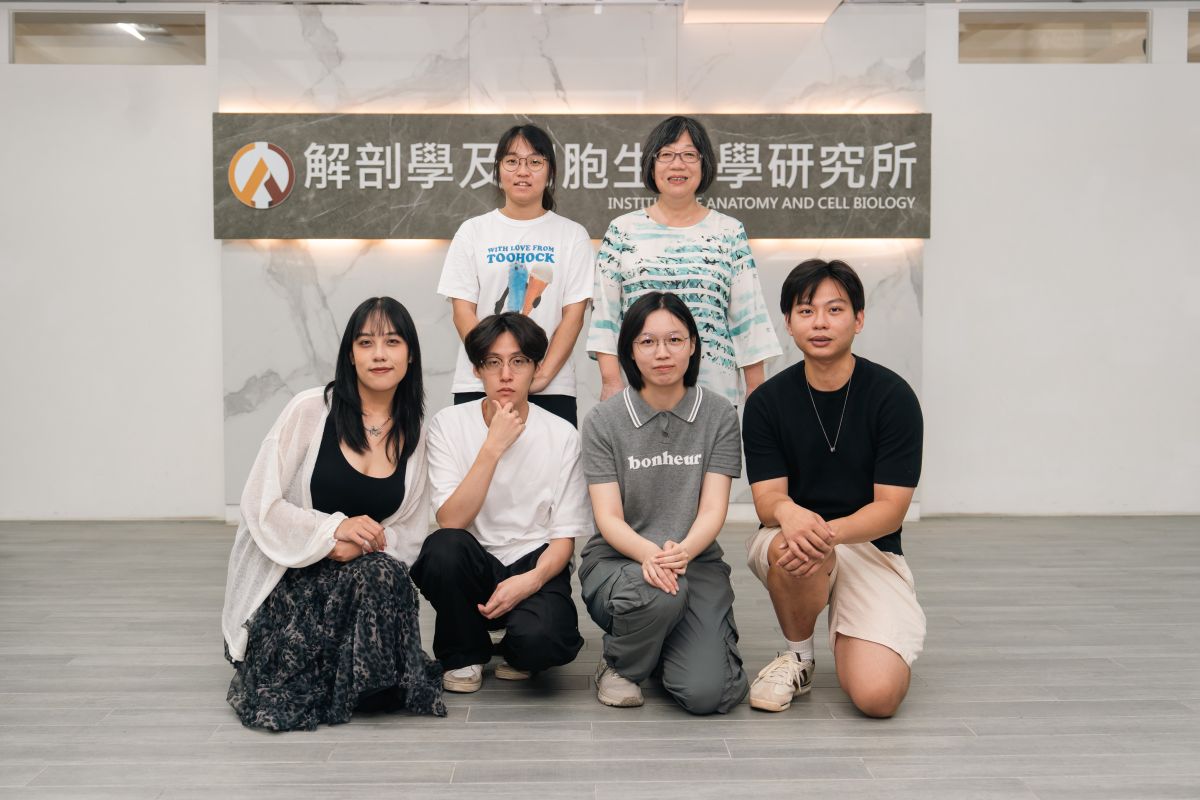
Professor Yu-Show Fu (back row, right) with members of her research team at NYCU’s Institute of Anatomy and Cell Biology. © NYCU ELITE
Discarded Umbilical Cords: A Natural Scaffold for Periodontal Regeneration | NYCU ELITE EP42
⬆️ Watch Discarded Umbilical Cords: A Natural Scaffold for Periodontal Regeneration | NYCU ELITE EP42
文/ 照片/NYCU ELITE

臺北訊——世界衛生組織估計,全球有超過十億人受到嚴重牙周病影響。國立陽明交通大學與臺北榮民總醫院組成的榮陽交研究團隊,將人類臍帶中的瓦頓氏凝膠製成去細胞化天然基質,並在大鼠牙周缺損模型中觀察到齒槽骨新生與牙周韌帶修復。這項成果為同時重建兩種牙周支持組織提供新的研究方向,但目前仍屬動物實驗階段,尚未證實可用於人體治療。

同時修復骨與韌帶,是牙周再生的關鍵

牙周病會破壞支撐牙齒的齒槽骨與牙周韌帶。病程進展後,牙周囊袋加深、齒槽骨流失,牙齒可能逐漸鬆動甚至脫落。現行中重度牙周病治療可透過翻瓣手術,搭配骨粉或再生膜促進組織修復;然而,要在同一缺損區域穩定重建齒槽骨與牙周韌帶,仍是牙周再生醫學的重要挑戰。

為尋找新的材料策略,陽明交大解剖學及細胞生物學研究所傅毓秀教授,與臺北榮總骨科部陳正豐醫師、口腔醫學部羅文良醫師及婦女醫學部葉長青醫師合作,將人類臍帶中的瓦頓氏凝膠進行冷凍乾燥與去細胞化處理,保留其細胞外基質,製成不含活細胞的天然生物支架。

瓦頓氏凝膠提供細胞生長所需的天然環境

瓦頓氏凝膠原本位於臍帶血管周圍,富含玻尿酸、膠原蛋白與其他細胞外基質成分。研究團隊分析發現,去細胞化後的材料仍保有立體多孔結構,可作為細胞遷移、附著與生長的支架。由於材料本身不含活細胞,也不必在植入時額外加入幹細胞,未來在保存、運送與產品化方面可能較細胞治療更具彈性。

「以前臍帶都被當成生產後的廢棄物,但我覺得其實臍帶是老天給的禮物!」——國立陽明交通大學傅毓秀教授

動物模型觀察到齒槽骨與牙周韌帶修復

研究團隊在大鼠下顎臼齒周圍建立齒槽骨與牙周韌帶缺損,再植入去細胞化瓦頓氏凝膠基質。根據團隊的動物實驗結果,在未額外加入幹細胞或骨粉的情況下,治療區域出現新生骨質與牙周韌帶修復;相較於對照組,兩種組織的修復表現更為明顯。


這項結果的意義,不只在於促進骨質生長,更在於研究團隊同時觀察到牙周韌帶的修復。牙周韌帶位於牙根與齒槽骨之間,除了固定牙齒,也能在咬合時提供緩衝。若未來能在更多臨床前模型與人體試驗中確認安全性和有效性,這類材料可能為牙周組織再生及植牙前骨缺損處理提供新的選項。

從臍帶研究走向無細胞再生材料

傅毓秀投入臍帶與再生醫學研究已逾二十年。早期研究聚焦於臍帶間質幹細胞在神經退化、肺纖維化與組織修復等領域的潛力;近年團隊則進一步探索如何將臍帶組織轉化為不含活細胞的生物材料。2018年起,團隊投入骨質修復研究,之後將去細胞化瓦頓氏凝膠應用於牙周缺損模型。

相關研究成果刊登於《Biomaterials Science》,並獲選為期刊封面故事。團隊目前已取得國內專利,並進行國際專利布局,希望進一步建立材料製備、品質管理與量產方法。

下一步:完成臨床前安全性與有效性驗證

研究團隊下一階段將持續評估不同牙周缺損程度的修復效果、材料與骨粉併用的可能性,以及長期安全性、免疫反應與製程一致性。傅毓秀強調,研究的最終目標是解決臨床需求;不過,從動物實驗走向人體應用,仍須完成嚴謹的臨床前試驗、法規審查與人體臨床試驗。

研究階段說明
本研究目前為動物實驗成果,並非已核准之牙周病治療。任何人體療效、安全性、適應症與上市時程,均有待後續研究及主管機關審查。


Related Image(s):