Latest News

  • Research Highlights

  • Publish Date:2026-09-09
NYCU and NCKU Develop ‘Molecular GPS’ With Potential to Treat Neurodegenerative Diseases
mice
Mice treated with togoPhosTAC showed improved memory and reduced anxiety-like behavior, alongside lower levels of abnormal tau phosphorylation—findings that support further investigation of the approach.
 
Edited by Chance Lai
______
Researchers at National Yang Ming Chiao Tung University (NYCU) and National Cheng Kung University (NCKU) have developed a “molecular GPS” that guides engineered enzymes to disease-associated proteins, reducing abnormal tau phosphorylation and improving memory in mice. The findings offer a potential new direction for research into Alzheimer’s and other neurodegenerative diseases, which place a profound burden on patients and their families.

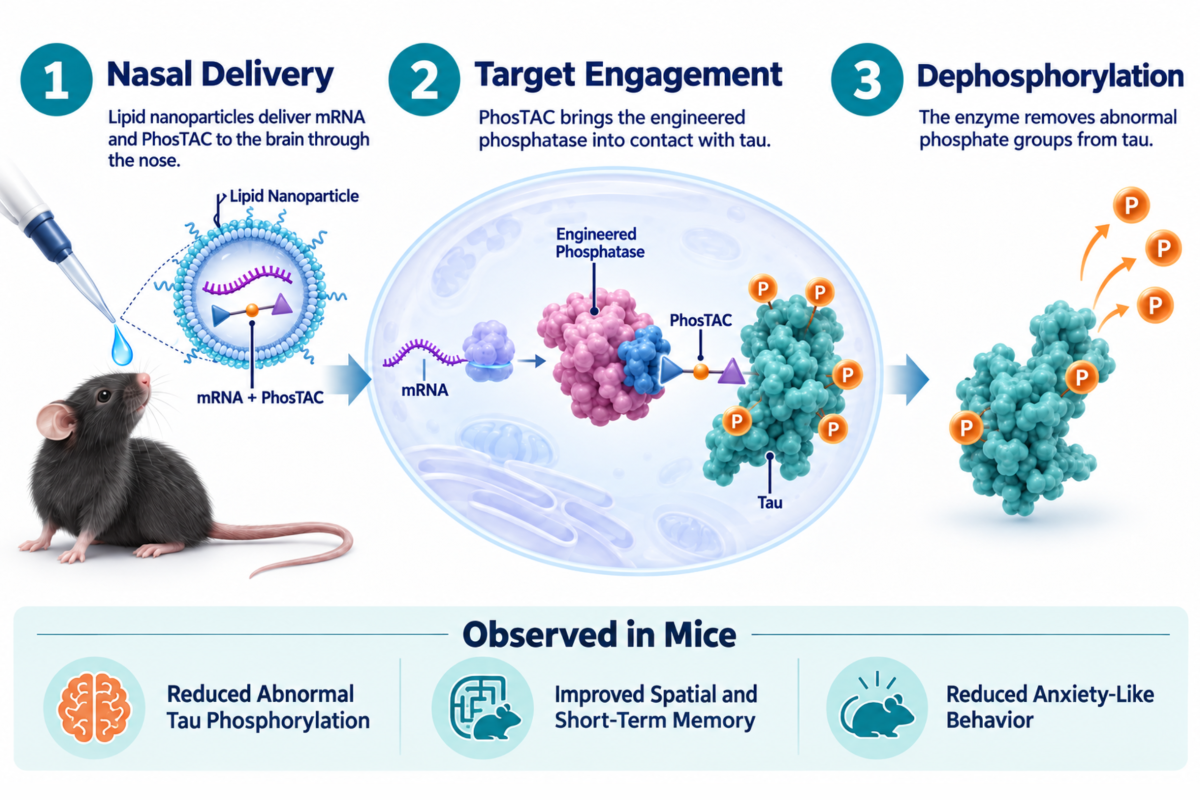
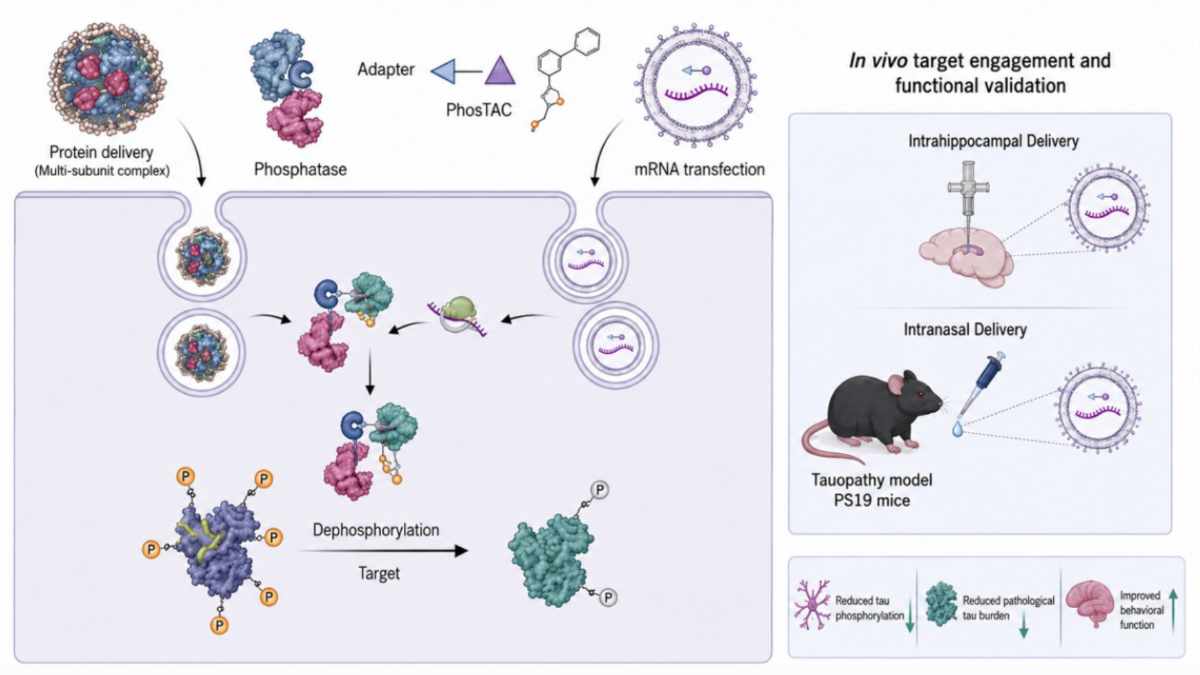
The approach combines targeted protein dephosphorylation—a process that removes phosphate groups from specific proteins—with a lipid nanoparticle delivery system. Together, they enable engineered enzymes called phosphatases to reach their targets and remove abnormal phosphate signals associated with disease.

The research brought together Hong-Ru Chen, an assistant professor in NYCU’s Department of Life Sciences and Institute of Genome Sciences, and Po-Han Chen, an assistant professor in NCKU’s Institute of Biochemistry and Molecular Biology. Their platform, called togoPhosTAC, is described in a study published August 14 in Nature Communications.
 
Nobel laureate in chemistry Professor Arieh Warshel shares stories from his formative years with incoming students.
Schematic illustration of the mechanism underlying togoPhosTAC-mediated targeted protein dephosphorylation.

Targeting a Harmful Change in Tau

Alzheimer’s disease is closely associated with the abnormal buildup of amyloid plaques in the brain. Tau, a protein that normally helps maintain the structural stability of nerve cells, also plays a role. When excessive phosphate groups attach to tau—a condition known as hyperphosphorylation—the protein can contribute to disease and amplify amyloid-related toxicity.

Despite growing understanding of this process, effective treatment strategies that precisely target and remove abnormal phosphate signals remain lacking.

“This technology works like a precise molecular GPS,” Hong-Ru Chen said. She likened excessive protein phosphorylation to a switch that activates harmful signaling inside nerve cells. Turning off that signal, she explained, could help reduce damage.

Part of the problem arises when phosphatases, the enzymes responsible for removing phosphate groups, become less active in the brain. As a result, abnormal phosphorylation can accumulate. The new technology directs these enzymes to tau, allowing them to remove phosphate groups at multiple disease-associated sites.

Delivering Treatment Through the Nose

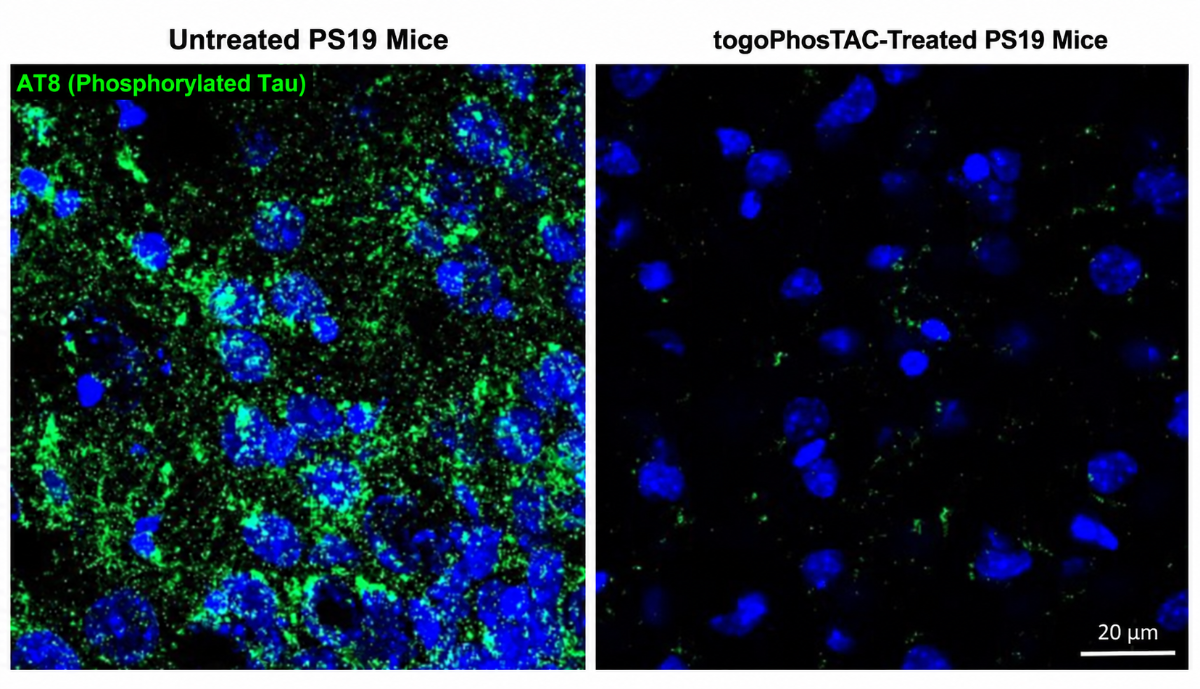
The team tested a noninvasive approach by administering the treatment intranasally to mice with tau-related disease pathology. The treatment reached the brain and significantly reduced abnormal tau phosphorylation at several sites.

The president and vice presidents offer words of encouragement to incoming students.Fluorescence images show a marked reduction in phosphorylated tau (green, AT8 staining) in the brains of PS19 mice treated with togoPhosTAC (right), compared with untreated mice (left). Cell nuclei appear in blue. Scale bar: 20 μm.


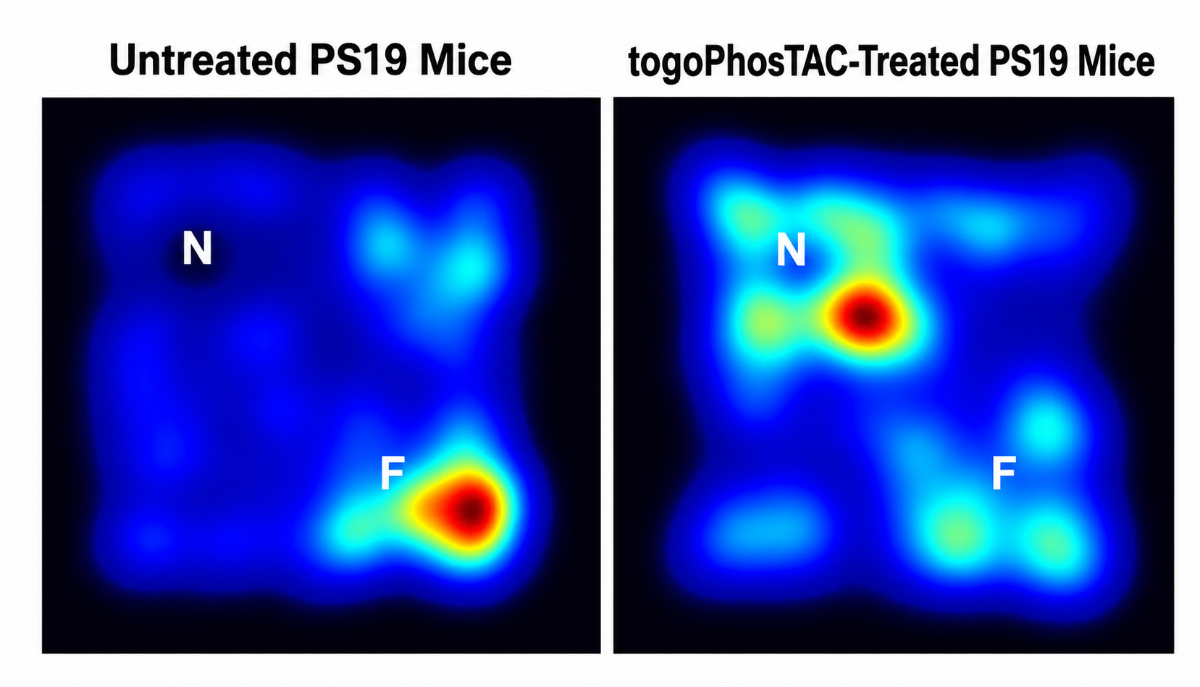
In maze and recognition tests, treated mice showed improvements in spatial and short-term memory, along with reduced anxiety-like behavior.

An incoming student uses a smartphone to take part in an interactive session during NYCU’s freshman convocation.
Exploration heat maps show greater interest in a novel object (N) among togoPhosTAC-treated PS19 mice (right) than untreated mice (left), consistent with improved recognition memory. F marks the familiar object; warmer colors indicate more time spent in an area.

The researchers reported no detectable signs of neuronal damage or toxicity in the brain under the conditions tested. These findings remain preclinical. Further research is needed to determine whether the approach can be developed into a safe and effective treatment for people.

Potential Beyond Alzheimer’s Research

The platform’s applications may extend beyond tau. The team also demonstrated targeted removal of phosphate groups from epidermal growth factor receptor (EGFR), a protein implicated in cancer, and alpha-synuclein, which is associated with Parkinson’s disease.

By combining molecular targeting with nanotechnology, the researchers aim to develop a versatile approach to address abnormal protein phosphorylation across multiple diseases.

The team plans to further improve delivery to the brain as it works toward eventual clinical applications, with the long-term goal of expanding treatment options for neurodegenerative diseases.

The cheerleading squad delivers an energetic performance at the freshman convocation.
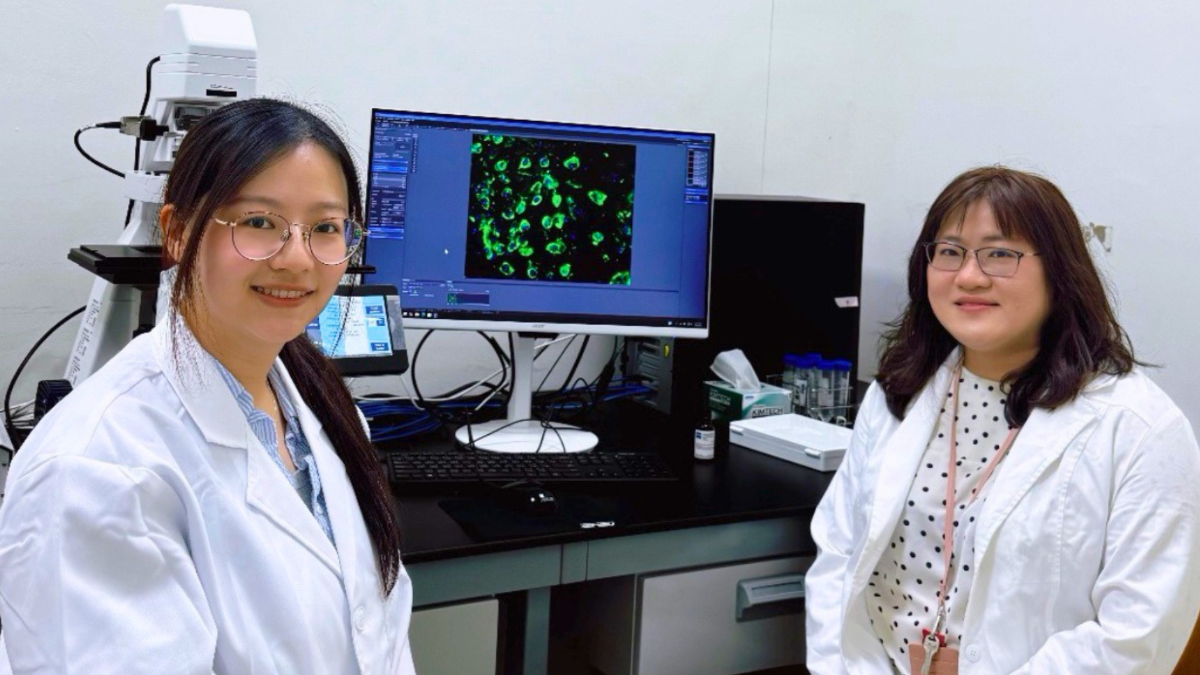
Assistant Professor Hong-Ru Chen (right) and student Hsiang-Ying Lin (left) of NYCU’s Department of Life Sciences and Institute of Genome Sciences.
文/公關組  圖/研究團隊
資訊圖/國際宣傳辦公室


阿茲海默症等神經退化疾病令患者與家屬感到無助。陽明交大與成大研究團隊成功開發出一套分子導航技術,能將經人工設計的去磷酸化酶精準送到大腦中發生病變的蛋白位置,讓蛋白恢復正常狀態,為神經退化疾病治療提供新的可能方向。

阿茲海默症的發生,與大腦中類澱粉蛋白斑塊異常堆積密切相關。另一方面,原本負責維持神經細胞結構穩定的「tau蛋白」,一旦過度磷酸化,也會加劇類澱粉蛋白的毒性。然而,面對這類蛋白質異常磷酸化,目前仍缺乏能夠精準鎖定並移除異常訊號的有效治療策略。

陽明交大生命科學系暨基因體科學研究所助理教授陳虹如,與成大生物化學暨分子生物學研究所助理教授陳伯翰共同合作,開發出一套全新的標靶去磷酸化技術,並結合新型脂質奈米顆粒遞送系統,讓人工修復的蛋白分子能精準運送至病變蛋白,達到精準醫療的目的。

令人振奮的是,研究團隊採用非侵入性的鼻腔給藥替小鼠進行治療。結果顯示,藥物能順利通過屏障進入大腦,顯著降低多個tau蛋白磷酸化蛋白。在迷宮與識別等行為測試中,可以發現小鼠的空間記憶力、短期記憶力與焦慮行為皆獲得改善,且大腦未出現任何神經細胞受損或毒性反應。


「這套技術就像是精準的分子GPS。」陳虹如如此形容。她說,蛋白質過度磷酸化就像神經細胞內受損訊號的開關,如果能關閉這個訊號,就有機會降低神經細胞受到的傷害。

陳虹如進一步解釋,tau蛋白之所以過度磷酸化,部分原因在於大腦中負責「關閉磷酸化訊號」的去磷酸化酶活性受損,導致磷酸化訊號不斷累積而無法被正常清除。而這項技術就是精準引導去磷酸化酶移除tau蛋白上多個關鍵的異常位點。

這項突破性研究成果發表於國際期刊《Nature Communications》。值得注意的是,除了tau蛋白外,研究團隊也證實,這項技術也能針對癌症相關的表皮生長因子受體(EGFR),以及與巴金森氏症相關的α-synuclein蛋白,精準移除異常磷酸化訊號。這項結合化學分子與奈米科技的臺灣之光技術,未來將持續優化腦部遞送效果,期望能早日轉化為臨床治療,為神經退化疾病治療帶來新契機。
 

Related Image(s):