


神農坡雜誌網路版

參與共好
- 發布日期:114-09-24
- 更新日期:115-03-30
- 發布單位:公共關係組
陽明交大在高雄 NYCU in Kaohsiung
文/顏廷恩
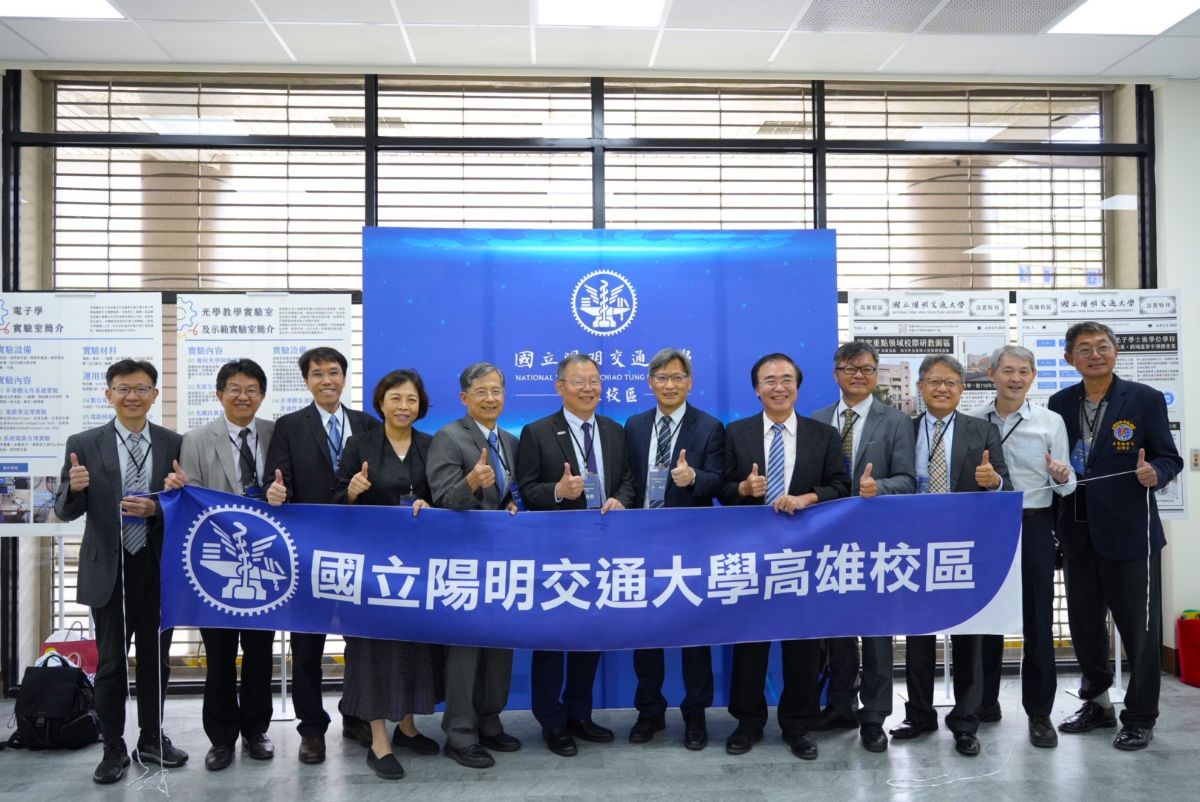
圖/陳永富副校長辦公室提供、秘書處
圖/陳永富副校長辦公室提供、秘書處
在地記憶,嶄新啟航
今年夏天,高雄的太陽熱得發燙,新校區的工地也跟著熱鬧起來。推土機轟隆隆地往前推進,工作人員穿梭在大樓間測量、記錄。就在這一磚一瓦之間,陽明交大高雄校區正一點一滴地成形。
但這裡可不是只有蓋房子這麼簡單,怎麼讓一所學校的校區在南臺灣落地生根、跟在地產業接軌、打造出能吸引學生的學習場域?
這些問題,都在陽明交大的師長們腦中來回盤旋。這次,我們邀請副校長陳永富與高雄分部籌備處主任蘇冠暐教授,帶大家從第一線視角,看高雄校區如何一步步建構出這座城市的高等教育新據點。
當你走進陽明交大高雄校區,迎面而來的是一座鄰近蓮池潭、綠意環繞的靜謐場域,而許多在地居民一眼就認出,這裡是曾風光一時的蓮潭國際會館。
過去它是公務人員訓練中心,也是一座熱鬧的旅館,多年來接待來自各地的受訓人員,會館裡的商店也是附近街坊日常會造訪的地方,這座建築也成了當地人熟悉的地標與生活記憶的一部分。
但隨著原營運單位退出、市府也重新思考場域的下一步。高雄這座快速匯聚高科技產業的城市,也同步布局教育的進駐。就這樣,陽明交大受高雄市府的邀請進駐,將這片空間,轉化為兼具教育、研究與生活連結的新校區。
陳永富副校長說,校區的設計並非複製傳統樣貌,而是以場域原有的結構為基礎,逐步整建補強、再加入產學合作大樓,打造符合在地特質的發展藍圖。
蘇主任攤開校區總體規劃圖時,畫面宛如拼圖般一塊塊緩緩拼合。從蓮池潭風景區望過去,陽明交大高雄校區沿著綠意與水岸鋪展開來。
校區三大建物各具功能,第一會館 (原蓮潭國際會館) 未來將以ROT(Rehabilitate-Operate-Transfer)方式引入旅宿業者合作經營,延續原有住宿與會展機能。
育成大樓 (原公務人力發展中心) 則是教學與行政樓,規劃有教室、教學實驗室、學程辦公室與演講廳。正在興建中的產學一館,預計2029年完工,將設有前瞻研究實驗室、產學研究中心與科學推廣中心等高科技設施,成為連結產業與學術的重要節點。
學習新起點
另一方面,學生可以到高雄校區學什麼呢?在臺灣,科技業長年被視為具有吸引力與發展潛力的就業選項。
無論是半導體、電子製造,還是近年的 AI 與資安領域,這些產業除了提供優渥的薪資與完善的升遷制度,也因在國際市場中極具競爭力,讓許多求職者看見更多的可能性。因此,無論在選填志願或規劃職涯時,進科技業經常被視為一條值得投入的方向。
但人生的路從來不是一條直線。有人在大學主修外語、國際關係或商業管理,畢業後進入媒體產業或非營利組織,從事行銷企劃、教育推廣等工作,將所學專業應用於不同領域,累積了經驗。
然而,隨著生活歷程與產業趨勢變化,有些人開始期盼能參與更具規模與影響力的專案。這時培養一項能跨足不同產業的新專長,成了他們重新出發的關鍵一步。於是,他們轉頭望向科技業。
科技業的確有其進入門檻,但同時也敞開了許多可能,不一定每個人都要成為工程師,還有許多職位結合技術與其他專長,例如產品管理、技術行銷等。
這時候若能將過去的經驗與新的技能結合,便有機會在職涯中開啟另一條道路。科技業或許不是每個人的目標,但對不少人而言,它仍是一個值得嘗試的方向。
與此同時,臺灣科技產業正快速發展,各企業對人才的需求持續升高。積極尋找合適的人才,已成為許多企業的日常。產業的拓展也讓企業格外重視擁有技術與其他專長的人才。
陳副校長與業界深入對話後發現,企業有時難以找到人才,問題的核心其實在於學歷持續升高,但人才實際數量並未增加。碩博士名額再多,若學士人才沒擴大,整體的人才缺口仍補不上。
因此,他選擇從「學士後教育」切入。先前與勞動部合作辦理短期密集課程,讓非理工背景者也能在三個月內學得一技之長,這樣的實驗頗有成效,吸引了教育部注意,進而促成「學士後電子與光子學士學位學程」在交大校區的誕生。這是一個跳脫傳統的兩年制學程,專注於理工基礎與技術訓練,讓學生在短時間內取得第二學士學位。
交大校區辦理獲好評後,陳副校長便將這套模式帶到高雄,在高雄校區成立「學士後電子與光子學士學位學程」,第一屆將在今年9月開學。由於是頂尖大學首度在新竹以外開設重點領域第二學士,成立後迅速引起地方關注。
當地里長主動幫忙宣傳,報名情況也相當熱絡。更有來自音樂、藝術、經濟等領域的大學或碩士畢業生申請入學,期待透過第二專長打開更多就業與產業連結的選項。
高雄校區就這樣一步步走出自己的定位,成為培育轉軌人才的基地,以紮實課程設計與熱絡招生狀況,回應產業與地方的雙重期待。除「學士後電子與光子學士學位學程」,陽明交大也正在規劃其他碩博士課程。
有溫度的藍圖
在陽明交大高雄校區的籌備歷程中,師長們的動力,除了來自制度規劃,也來自多年累積的教育信念。
陳副校長坦言,對於一個剛起步的新校區,所需要的並非單是履行職責,還要投入更多熱忱與信念。他說,他之所以選擇持續投入,是因為相信這件事對學生有深刻的意義。
這份堅持,來自陳副校長求學時的一個念頭,也就是想當一位不一樣的老師。他說:「如果我們能多做一點,讓更多學生有選擇未來的機會,那就值得。」高雄校區對陳副校長來說,不是校區地圖上的擴張標記,是一個承諾,對準備轉向、重新出發的學生,鋪一條實在可行的路。
蘇主任認為,高雄校區的潛力,除了延續陽明交大在半導體與AI領域的優勢,他也期待這裡能發展出融合在地產業、人文藝術、與健康樂活的創新風貌,與其他大學共同打造高等教育協作網絡。
在這段逐步成形的過程中,蘇主任說,學校也正結合高雄在地資源,積極從師資延攬、課程設計到企業協作與產學實作等面向深化連結,培養貼近產業需求的人才。
這一切努力,都是為了讓學生能安心學習,並在南臺灣這片土地上,看見職涯的更多可能。當我們重新想像高等教育的樣貌時,高雄校區是一個充滿可能的起點。
在這片與產業緊密相連、文化脈動豐富的土地上,陽明交大與師生、地方與產業攜手描繪未來。故事仍在書寫,而每一位願意踏上這段路程的學生,都將是推動改變的重要角色。
今年夏天,高雄的太陽熱得發燙,新校區的工地也跟著熱鬧起來。推土機轟隆隆地往前推進,工作人員穿梭在大樓間測量、記錄。就在這一磚一瓦之間,陽明交大高雄校區正一點一滴地成形。
但這裡可不是只有蓋房子這麼簡單,怎麼讓一所學校的校區在南臺灣落地生根、跟在地產業接軌、打造出能吸引學生的學習場域?
這些問題,都在陽明交大的師長們腦中來回盤旋。這次,我們邀請副校長陳永富與高雄分部籌備處主任蘇冠暐教授,帶大家從第一線視角,看高雄校區如何一步步建構出這座城市的高等教育新據點。
當你走進陽明交大高雄校區,迎面而來的是一座鄰近蓮池潭、綠意環繞的靜謐場域,而許多在地居民一眼就認出,這裡是曾風光一時的蓮潭國際會館。
過去它是公務人員訓練中心,也是一座熱鬧的旅館,多年來接待來自各地的受訓人員,會館裡的商店也是附近街坊日常會造訪的地方,這座建築也成了當地人熟悉的地標與生活記憶的一部分。
但隨著原營運單位退出、市府也重新思考場域的下一步。高雄這座快速匯聚高科技產業的城市,也同步布局教育的進駐。就這樣,陽明交大受高雄市府的邀請進駐,將這片空間,轉化為兼具教育、研究與生活連結的新校區。
陳永富副校長說,校區的設計並非複製傳統樣貌,而是以場域原有的結構為基礎,逐步整建補強、再加入產學合作大樓,打造符合在地特質的發展藍圖。
蘇主任攤開校區總體規劃圖時,畫面宛如拼圖般一塊塊緩緩拼合。從蓮池潭風景區望過去,陽明交大高雄校區沿著綠意與水岸鋪展開來。
校區三大建物各具功能,第一會館 (原蓮潭國際會館) 未來將以ROT(Rehabilitate-Operate-Transfer)方式引入旅宿業者合作經營,延續原有住宿與會展機能。
育成大樓 (原公務人力發展中心) 則是教學與行政樓,規劃有教室、教學實驗室、學程辦公室與演講廳。正在興建中的產學一館,預計2029年完工,將設有前瞻研究實驗室、產學研究中心與科學推廣中心等高科技設施,成為連結產業與學術的重要節點。
學習新起點
另一方面,學生可以到高雄校區學什麼呢?在臺灣,科技業長年被視為具有吸引力與發展潛力的就業選項。
無論是半導體、電子製造,還是近年的 AI 與資安領域,這些產業除了提供優渥的薪資與完善的升遷制度,也因在國際市場中極具競爭力,讓許多求職者看見更多的可能性。因此,無論在選填志願或規劃職涯時,進科技業經常被視為一條值得投入的方向。
但人生的路從來不是一條直線。有人在大學主修外語、國際關係或商業管理,畢業後進入媒體產業或非營利組織,從事行銷企劃、教育推廣等工作,將所學專業應用於不同領域,累積了經驗。
然而,隨著生活歷程與產業趨勢變化,有些人開始期盼能參與更具規模與影響力的專案。這時培養一項能跨足不同產業的新專長,成了他們重新出發的關鍵一步。於是,他們轉頭望向科技業。
科技業的確有其進入門檻,但同時也敞開了許多可能,不一定每個人都要成為工程師,還有許多職位結合技術與其他專長,例如產品管理、技術行銷等。
這時候若能將過去的經驗與新的技能結合,便有機會在職涯中開啟另一條道路。科技業或許不是每個人的目標,但對不少人而言,它仍是一個值得嘗試的方向。
與此同時,臺灣科技產業正快速發展,各企業對人才的需求持續升高。積極尋找合適的人才,已成為許多企業的日常。產業的拓展也讓企業格外重視擁有技術與其他專長的人才。
陳副校長與業界深入對話後發現,企業有時難以找到人才,問題的核心其實在於學歷持續升高,但人才實際數量並未增加。碩博士名額再多,若學士人才沒擴大,整體的人才缺口仍補不上。
因此,他選擇從「學士後教育」切入。先前與勞動部合作辦理短期密集課程,讓非理工背景者也能在三個月內學得一技之長,這樣的實驗頗有成效,吸引了教育部注意,進而促成「學士後電子與光子學士學位學程」在交大校區的誕生。這是一個跳脫傳統的兩年制學程,專注於理工基礎與技術訓練,讓學生在短時間內取得第二學士學位。
交大校區辦理獲好評後,陳副校長便將這套模式帶到高雄,在高雄校區成立「學士後電子與光子學士學位學程」,第一屆將在今年9月開學。由於是頂尖大學首度在新竹以外開設重點領域第二學士,成立後迅速引起地方關注。
當地里長主動幫忙宣傳,報名情況也相當熱絡。更有來自音樂、藝術、經濟等領域的大學或碩士畢業生申請入學,期待透過第二專長打開更多就業與產業連結的選項。
高雄校區就這樣一步步走出自己的定位,成為培育轉軌人才的基地,以紮實課程設計與熱絡招生狀況,回應產業與地方的雙重期待。除「學士後電子與光子學士學位學程」,陽明交大也正在規劃其他碩博士課程。
有溫度的藍圖
在陽明交大高雄校區的籌備歷程中,師長們的動力,除了來自制度規劃,也來自多年累積的教育信念。
陳副校長坦言,對於一個剛起步的新校區,所需要的並非單是履行職責,還要投入更多熱忱與信念。他說,他之所以選擇持續投入,是因為相信這件事對學生有深刻的意義。
這份堅持,來自陳副校長求學時的一個念頭,也就是想當一位不一樣的老師。他說:「如果我們能多做一點,讓更多學生有選擇未來的機會,那就值得。」高雄校區對陳副校長來說,不是校區地圖上的擴張標記,是一個承諾,對準備轉向、重新出發的學生,鋪一條實在可行的路。
蘇主任認為,高雄校區的潛力,除了延續陽明交大在半導體與AI領域的優勢,他也期待這裡能發展出融合在地產業、人文藝術、與健康樂活的創新風貌,與其他大學共同打造高等教育協作網絡。
在這段逐步成形的過程中,蘇主任說,學校也正結合高雄在地資源,積極從師資延攬、課程設計到企業協作與產學實作等面向深化連結,培養貼近產業需求的人才。
這一切努力,都是為了讓學生能安心學習,並在南臺灣這片土地上,看見職涯的更多可能。當我們重新想像高等教育的樣貌時,高雄校區是一個充滿可能的起點。
在這片與產業緊密相連、文化脈動豐富的土地上,陽明交大與師生、地方與產業攜手描繪未來。故事仍在書寫,而每一位願意踏上這段路程的學生,都將是推動改變的重要角色。
By Ting En Yen
Image courtesy of the Office of the Senior Vice President Dr. Yung-Fu Chen and the Secretariat
Image courtesy of the Office of the Senior Vice President Dr. Yung-Fu Chen and the Secretariat
New chapter for NYCU in Kaohsiung
As Kaohsiung sizzles under the blazing summer sun, the construction site for the new campus of National Yang Ming Chiao Tung University (NYCU) is humming with activity.
Bulldozers rumble forward, while crews weave between the buildings, measuring and taking notes. Little by little, brick by brick, the NYCU Kaohsiung campus is coming to life.
Although many new buildings are being erected, the real challenge of building the campus is for the university to establish strong roots in southern Taiwan, connect with local industries, and create a learning environment that truly appeals to students.
To explore these issues, we asked NYCU Senior Vice President Dr. Yung-Fu Chen and Professor Kuan-Wei Su, Director of the Kaohsiung Branch, to give us an inside look at how the Kaohsiung campus is gradually becoming a new hub for higher education in the city.
Upon stepping into NYCU’s Kaohsiung campus, visitors and students are greeted by the peaceful, green environment near Lotus Pond. Many local residents recognize the place as the former bustling Garden Villa Kaohsiung.
Previously, the location served as both a training center for civil servants and a lively hotel, welcoming trainees from all over. The shops inside were regular stops for neighbors, and over the years, the building became a familiar local landmark and a strong part of the community’s shared memory.
When the original operator stepped away, the city government began considering the site’s future. Since Kaohsiung is quickly becoming a hub for high-tech industries, the city started making plans to bring in new educational resources.
As part of this effort, the Kaohsiung City Government invited NYCU to move into the space and transform it into a new campus that integrates education, research, and daily life. Dr. Chen explains that the campus isn’t being built to simply replicate traditional models.
Instead, it incorporates the site’s original structures, which are being gradually renovated and reinforced. Importantly, a building for industry-academia collaboration is being added as well, creating an environment that truly reflects the area’s unique character.
When Professor Su unfolds the campus master plan, it’s like watching a puzzle gradually come together. Looking out from the Lotus Pond Scenic Area, NYCU’s Kaohsiung campus stretches along the waterfront and is full of lush greenery.
The campus is anchored by three main buildings, each serving a distinct purpose. The Academy Hotel, formerly the Garden Villa Kaohsiung, will soon be managed by a hospitality partner under a “Rehabilitate-Operate-Transfer” arrangement.
This will allow the space to continue serving its original roles as both an accommodation and a venue for conferences and exhibitions.
The Incubation Building (formerly the Civil Service Development Institute, Kaohsiung City) serves as the core teaching and administrative facility. The building contains classrooms, teaching laboratories, program offices, and an auditorium.
The third main building is currently under construction and slated for completion in 2029. This Industry-Academia Building I will house Advanced Research Laboratory, an Industry-Academia Research Center, and a Science Education Center.
Equipped with advanced facilities, this new building is set to become a pivotal hub connecting the worlds of industry and academia.
Fresh start for students
So, what can students study at the Kaohsiung campus? In Taiwan, the tech industry has long been considered an attractive and promising career option.
Whether it’s semiconductors, electronics manufacturing, or the growing fields of artificial intelligence (AI) and cybersecurity, the tech industry offers not only high salaries and strong opportunities for advancement, but it is also extremely valuable globally, opening up more career options for job seekers.
When it comes time for students to choose a major or plan their career, the tech industry is often seen as a worthwhile field.
But life’s path is not usually a straight line. Many people major in foreign languages, international relations, or business management in college. Then, they go on to work in fields like media or nonprofit organizations, often in roles such as marketing, educational outreach, and more.
By applying their knowledge and skillsets to a variety of different areas, they build valuable experience and provide essential assets to these fields.
As life moves forward and industries change, many people begin looking for opportunities to take part in larger, more influential projects. This is often when people consider turning to the tech industry. At that point, developing new, transferable skills becomes a key to starting fresh.
Although the tech sector has some barriers to entry, it offers a wealth of opportunities. Not everyone needs to become an engineer, as there are plenty of roles that blend technical knowledge with other strengths, like product management or technical marketing.
By combining their past experience with new skills, people can open up new directions for their careers. The tech industry isn’t everyone’s dream, but for many, it’s a path worth taking.
At the same time, Taiwan’s tech industry is experiencing rapid growth, with companies facing an ever-increasing demand for talent. Actively searching for qualified candidates has become a routine part of business for many employers.
As the industry continues to expand, companies place greater value on candidates who offer technical expertise or additional specialized skills.
After extensive discussions with industry leaders, Dr. Chen realized that businesses sometimes struggle to find the right people.
The underlying issue is that, while educational attainment keeps rising, the actual number of qualified professionals isn’t increasing. No matter how many extra slots are created for master’s or PhD students, if the pool of bachelor’s degree holders doesn’t grow, a talent gap would remain.
To address this issue, he shifted his focus to post-baccalaureate education. Previously, he had collaborated with the Ministry of Labor to run short-term, intensive courses that enabled those without science or engineering backgrounds to acquire practical skills in just three months.
This experiment was quite successful, attracting the attention of the Ministry of Education and eventually leading to the creation of the Electronics and Photonics Post-undergraduate Second Degree Program at NYCU.
This program breaks from the traditional two-year model by focusing specifically on foundational science and technical training, allowing students to earn a second bachelor’s degree within a relatively short time.
After the program received positive feedback at NYCU, Dr. Chen brought the same model to Kaohsiung, establishing the Electronics and Photonics Post-undergraduate Second Degree Program at the Kaohsiung campus.
The first cohort in this program is set to begin this September, marking the first time a top university has launched a key second bachelor’s degree program outside of Hsinchu. Thus, the initiative quickly attracted significant local attention.
The local community leader (known as a lǐ zhǎng) played an active role in spreading the word, and interest in the program was strong.
Even graduates with bachelor’s and master’s degrees in fields like music, art, and economics applied, hoping that a second area of expertise would open up more career options and industry connections.
In this way, the Kaohsiung campus is carving out its own identity, becoming a hub for people looking to make career transitions. With its strong curriculum and impressive enrollment numbers, the campus is meeting the expectations of both industry and the local community.
Alongside the Electronics and Photonics Post-undergraduate Second Degree Program, NYCU is also planning to add master’s and doctoral programs.
Passion in practice
As NYCU’s Kaohsiung campus takes shape, motivation among faculty members comes not only from institutional planning, but largely from their personal commitments to education.
Dr. Chen observed that for a brand-new campus, success requires the faculty to do more than fulfil their official duties. It demands real passion and a sense of conviction. He explains that he has chosen to stay involved because he believes this work holds profound meaning for students.
This persistence goes back to his days as a student, when he dreamed of becoming a different kind of teacher. As he put it, “If we can do a little more, and give more students a chance to shape their own futures, it’s worthwhile.”
For Dr. Chen, the Kaohsiung campus is more than just another expansion on the map, it’s a commitment to build a real and attainable path for students who are ready to move in a new direction.
Professor Su believes that the potential of the Kaohsiung campus is not limited to NYCU’s strengths in semiconductors and AI.
He also envisions the campus developing an innovative character that integrates local industry, humanities and arts, and health and wellness. For this reason, the campus is exploring the possibility of working with other universities to build a collaborative higher education network.
During development of the campus, Professor Su notes that the university is working tirelessly to harness Kaohsiung’s local resources. An emphasis has been placed on areas ranging from faculty recruitment and curriculum design to corporate partnerships and industry–academia collaborations.
All of these efforts aim to nurture talent that closely aligns with industry needs, enabling students to learn with confidence and to see broader career possibilities in southern Taiwan.
As we reimagine the future of higher education in Taiwan, the Kaohsiung campus stands as a promising standard. The campus is closely tied to industry and has a vibrant cultural history. NYCU faculty, students, local communities, and partners are all working hand-in-hand to shape the path ahead.
The story of NYCU’s Kaohsiung campus has begun to be written, and every student who chooses to embark on this journey will help shape a new world of education.
As Kaohsiung sizzles under the blazing summer sun, the construction site for the new campus of National Yang Ming Chiao Tung University (NYCU) is humming with activity.
Bulldozers rumble forward, while crews weave between the buildings, measuring and taking notes. Little by little, brick by brick, the NYCU Kaohsiung campus is coming to life.
Although many new buildings are being erected, the real challenge of building the campus is for the university to establish strong roots in southern Taiwan, connect with local industries, and create a learning environment that truly appeals to students.
To explore these issues, we asked NYCU Senior Vice President Dr. Yung-Fu Chen and Professor Kuan-Wei Su, Director of the Kaohsiung Branch, to give us an inside look at how the Kaohsiung campus is gradually becoming a new hub for higher education in the city.
Upon stepping into NYCU’s Kaohsiung campus, visitors and students are greeted by the peaceful, green environment near Lotus Pond. Many local residents recognize the place as the former bustling Garden Villa Kaohsiung.
Previously, the location served as both a training center for civil servants and a lively hotel, welcoming trainees from all over. The shops inside were regular stops for neighbors, and over the years, the building became a familiar local landmark and a strong part of the community’s shared memory.
When the original operator stepped away, the city government began considering the site’s future. Since Kaohsiung is quickly becoming a hub for high-tech industries, the city started making plans to bring in new educational resources.
As part of this effort, the Kaohsiung City Government invited NYCU to move into the space and transform it into a new campus that integrates education, research, and daily life. Dr. Chen explains that the campus isn’t being built to simply replicate traditional models.
Instead, it incorporates the site’s original structures, which are being gradually renovated and reinforced. Importantly, a building for industry-academia collaboration is being added as well, creating an environment that truly reflects the area’s unique character.
When Professor Su unfolds the campus master plan, it’s like watching a puzzle gradually come together. Looking out from the Lotus Pond Scenic Area, NYCU’s Kaohsiung campus stretches along the waterfront and is full of lush greenery.
The campus is anchored by three main buildings, each serving a distinct purpose. The Academy Hotel, formerly the Garden Villa Kaohsiung, will soon be managed by a hospitality partner under a “Rehabilitate-Operate-Transfer” arrangement.
This will allow the space to continue serving its original roles as both an accommodation and a venue for conferences and exhibitions.
The Incubation Building (formerly the Civil Service Development Institute, Kaohsiung City) serves as the core teaching and administrative facility. The building contains classrooms, teaching laboratories, program offices, and an auditorium.
The third main building is currently under construction and slated for completion in 2029. This Industry-Academia Building I will house Advanced Research Laboratory, an Industry-Academia Research Center, and a Science Education Center.
Equipped with advanced facilities, this new building is set to become a pivotal hub connecting the worlds of industry and academia.
Fresh start for students
So, what can students study at the Kaohsiung campus? In Taiwan, the tech industry has long been considered an attractive and promising career option.
Whether it’s semiconductors, electronics manufacturing, or the growing fields of artificial intelligence (AI) and cybersecurity, the tech industry offers not only high salaries and strong opportunities for advancement, but it is also extremely valuable globally, opening up more career options for job seekers.
When it comes time for students to choose a major or plan their career, the tech industry is often seen as a worthwhile field.
But life’s path is not usually a straight line. Many people major in foreign languages, international relations, or business management in college. Then, they go on to work in fields like media or nonprofit organizations, often in roles such as marketing, educational outreach, and more.
By applying their knowledge and skillsets to a variety of different areas, they build valuable experience and provide essential assets to these fields.
As life moves forward and industries change, many people begin looking for opportunities to take part in larger, more influential projects. This is often when people consider turning to the tech industry. At that point, developing new, transferable skills becomes a key to starting fresh.
Although the tech sector has some barriers to entry, it offers a wealth of opportunities. Not everyone needs to become an engineer, as there are plenty of roles that blend technical knowledge with other strengths, like product management or technical marketing.
By combining their past experience with new skills, people can open up new directions for their careers. The tech industry isn’t everyone’s dream, but for many, it’s a path worth taking.
At the same time, Taiwan’s tech industry is experiencing rapid growth, with companies facing an ever-increasing demand for talent. Actively searching for qualified candidates has become a routine part of business for many employers.
As the industry continues to expand, companies place greater value on candidates who offer technical expertise or additional specialized skills.
After extensive discussions with industry leaders, Dr. Chen realized that businesses sometimes struggle to find the right people.
The underlying issue is that, while educational attainment keeps rising, the actual number of qualified professionals isn’t increasing. No matter how many extra slots are created for master’s or PhD students, if the pool of bachelor’s degree holders doesn’t grow, a talent gap would remain.
To address this issue, he shifted his focus to post-baccalaureate education. Previously, he had collaborated with the Ministry of Labor to run short-term, intensive courses that enabled those without science or engineering backgrounds to acquire practical skills in just three months.
This experiment was quite successful, attracting the attention of the Ministry of Education and eventually leading to the creation of the Electronics and Photonics Post-undergraduate Second Degree Program at NYCU.
This program breaks from the traditional two-year model by focusing specifically on foundational science and technical training, allowing students to earn a second bachelor’s degree within a relatively short time.
After the program received positive feedback at NYCU, Dr. Chen brought the same model to Kaohsiung, establishing the Electronics and Photonics Post-undergraduate Second Degree Program at the Kaohsiung campus.
The first cohort in this program is set to begin this September, marking the first time a top university has launched a key second bachelor’s degree program outside of Hsinchu. Thus, the initiative quickly attracted significant local attention.
The local community leader (known as a lǐ zhǎng) played an active role in spreading the word, and interest in the program was strong.
Even graduates with bachelor’s and master’s degrees in fields like music, art, and economics applied, hoping that a second area of expertise would open up more career options and industry connections.
In this way, the Kaohsiung campus is carving out its own identity, becoming a hub for people looking to make career transitions. With its strong curriculum and impressive enrollment numbers, the campus is meeting the expectations of both industry and the local community.
Alongside the Electronics and Photonics Post-undergraduate Second Degree Program, NYCU is also planning to add master’s and doctoral programs.
Passion in practice
As NYCU’s Kaohsiung campus takes shape, motivation among faculty members comes not only from institutional planning, but largely from their personal commitments to education.
Dr. Chen observed that for a brand-new campus, success requires the faculty to do more than fulfil their official duties. It demands real passion and a sense of conviction. He explains that he has chosen to stay involved because he believes this work holds profound meaning for students.
This persistence goes back to his days as a student, when he dreamed of becoming a different kind of teacher. As he put it, “If we can do a little more, and give more students a chance to shape their own futures, it’s worthwhile.”
For Dr. Chen, the Kaohsiung campus is more than just another expansion on the map, it’s a commitment to build a real and attainable path for students who are ready to move in a new direction.
Professor Su believes that the potential of the Kaohsiung campus is not limited to NYCU’s strengths in semiconductors and AI.
He also envisions the campus developing an innovative character that integrates local industry, humanities and arts, and health and wellness. For this reason, the campus is exploring the possibility of working with other universities to build a collaborative higher education network.
During development of the campus, Professor Su notes that the university is working tirelessly to harness Kaohsiung’s local resources. An emphasis has been placed on areas ranging from faculty recruitment and curriculum design to corporate partnerships and industry–academia collaborations.
All of these efforts aim to nurture talent that closely aligns with industry needs, enabling students to learn with confidence and to see broader career possibilities in southern Taiwan.
As we reimagine the future of higher education in Taiwan, the Kaohsiung campus stands as a promising standard. The campus is closely tied to industry and has a vibrant cultural history. NYCU faculty, students, local communities, and partners are all working hand-in-hand to shape the path ahead.
The story of NYCU’s Kaohsiung campus has begun to be written, and every student who chooses to embark on this journey will help shape a new world of education.
