


NEWS


International Affairs
- Publish Date:2024-01-10
NYCU Successfully Hosts International Forum on Technology Law: Promoting Asian Perspectives and Guiding Global Development in Tech Law
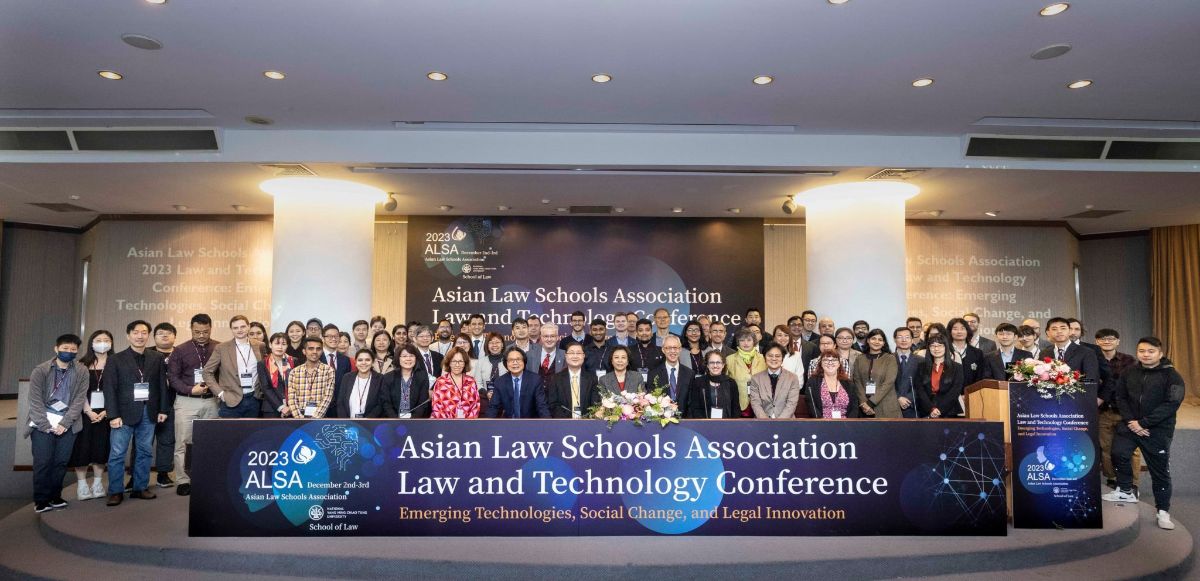
At the International Technology Law Conference 2023,
NYCU's School of Technology Law invites Asian scholars to discuss technology governance.
NYCU's School of Technology Law invites Asian scholars to discuss technology governance.
Translated by Yi Yun Huang
Edited by Yen-Chien, Lai
______
Edited by Yen-Chien, Lai
______
Entering the era of cloud-based technology, technology law inevitably turns towards a broader international perspective. To promote research on the unique Asian viewpoint in technology law, the School of Technology Law at National Yang Ming Chiao Tung University (NYCU) successfully organized the remarkable Asian Law Schools Association International Conference on Technology Law on December 2–3 in Hsinchu. Over a hundred scholars from more than 20 countries actively participated, exploring the current societal impacts of technological innovation and potential coping strategies.
This conference has covered a diverse and forward-looking range of topics, including human-robot interaction, trustworthy AI, virtual currency, internet governance, automation technology governance, data sharing and governance, the application of AI in the judiciary, digital platforms, intellectual property innovation, digital labor rights, geopolitics, biomedical innovation technology, digital technology, global health law, and the multifaceted subject of AI-facilitated legal education reform.
Insights from Renowned Scholars and the Asian Law Schools Association
This conference has covered a diverse and forward-looking range of topics, including human-robot interaction, trustworthy AI, virtual currency, internet governance, automation technology governance, data sharing and governance, the application of AI in the judiciary, digital platforms, intellectual property innovation, digital labor rights, geopolitics, biomedical innovation technology, digital technology, global health law, and the multifaceted subject of AI-facilitated legal education reform.
Insights from Renowned Scholars and the Asian Law Schools Association
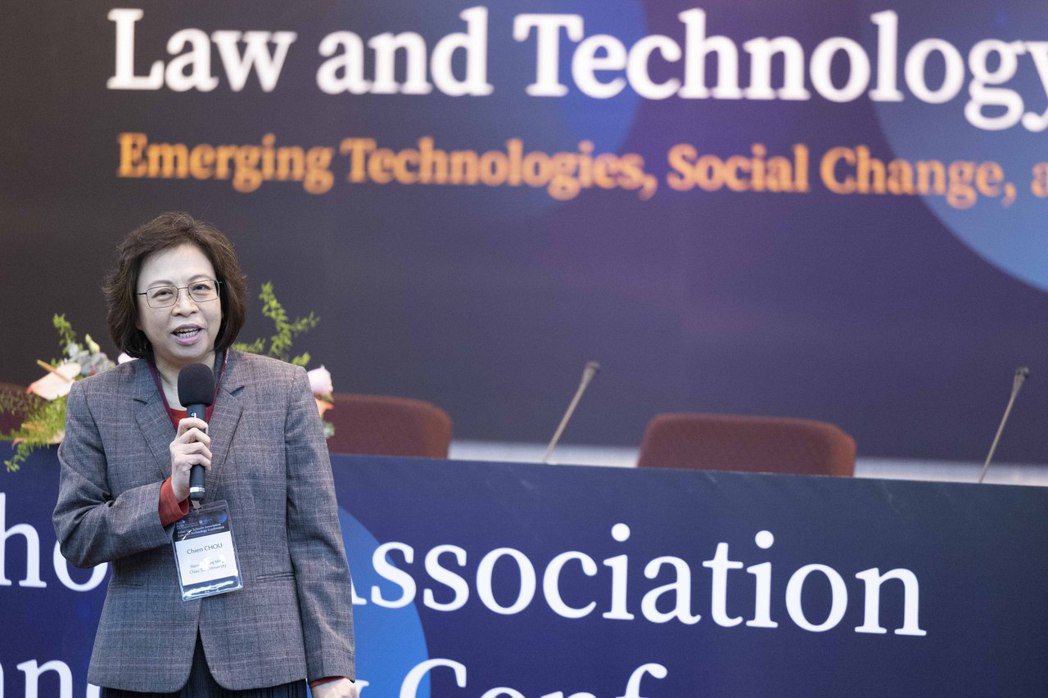
NYCU Vice President Chien Chou warmly emphasized the vital role of interdisciplinary tech law exchange for Asian countries in addressing the societal impacts of innovation, advocating a "people-oriented" approach.
The conference featured a strong lineup of speakers, including Taiwan's legal luminary, Professor Jiunn-Rong Yeh from the National Taiwan University Law School, and Professor Jeannie Paterson from the University of Melbourne Law School in Australia. These two scholars delved into cutting-edge topics, such as the transition of sustainable development systems and the regulation and technological challenges of digital identity authentication, sharing their insightful perspectives.
Additionally, scholars from the soon-to-be-published book team on human-machine interaction by Cambridge University Press, along with representatives from Georgetown University's O'Neill Institute—a prominent figure in U.S. public health law—and scholars from diverse fields, such as the Biomedical Law Center at Ewha Womans University School of Law in South Korea, actively participated in in-depth academic exchanges.
The conference featured a strong lineup of speakers, including Taiwan's legal luminary, Professor Jiunn-Rong Yeh from the National Taiwan University Law School, and Professor Jeannie Paterson from the University of Melbourne Law School in Australia. These two scholars delved into cutting-edge topics, such as the transition of sustainable development systems and the regulation and technological challenges of digital identity authentication, sharing their insightful perspectives.
Additionally, scholars from the soon-to-be-published book team on human-machine interaction by Cambridge University Press, along with representatives from Georgetown University's O'Neill Institute—a prominent figure in U.S. public health law—and scholars from diverse fields, such as the Biomedical Law Center at Ewha Womans University School of Law in South Korea, actively participated in in-depth academic exchanges.
Cheng Han Tan, the President of the Asian Law Schools Association, highlighted in his speech that Asian scholars frequently engage in dialogues with their Western counterparts. However, there is limited exchange with scholars from other Asian countries, leading to a deficiency in original perspectives in the development of Asian legal studies. To bridge this gap, the Asian Law Schools Association is dedicated to fostering dialogue among Asian legal scholars through alliances formed within law schools, aiming to promote unique contributions from Asia in the field of technology law.
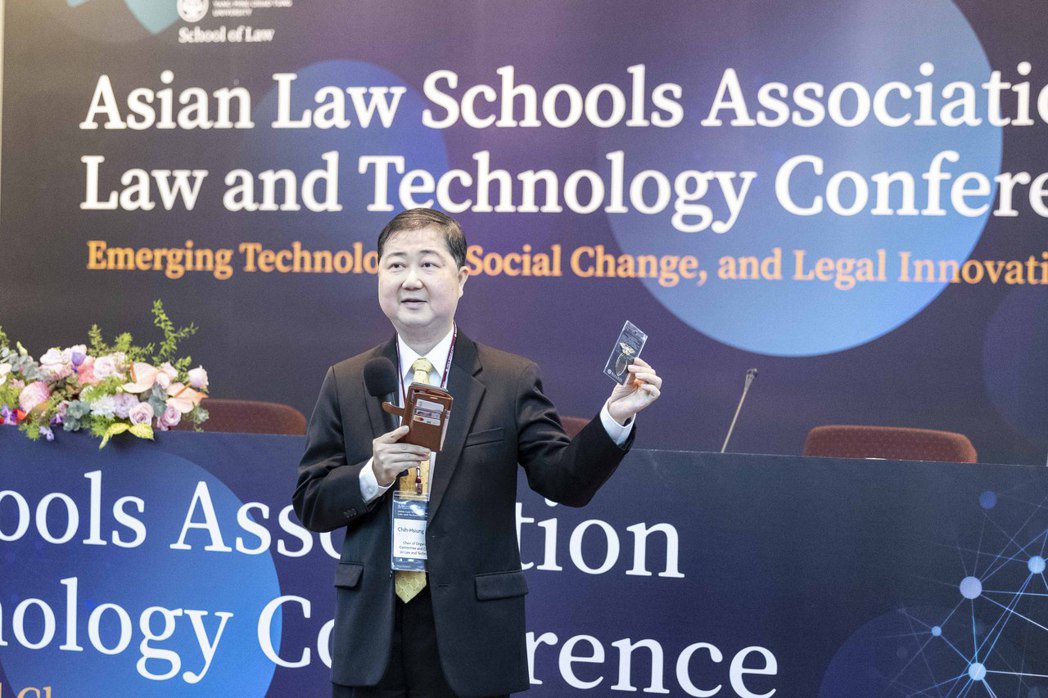
Conference Chairman and Dean of the School of Technology Law, Chih-Hsiung Chen, noted that although interdisciplinary research is common in legal studies, technology law research is fragmented across subfields, limiting its scale.
Empowering Asian Scholars: Urgency for Proactive Engagement in Technology Law
Chih-Hsiung Chen, the Dean of the School of Technology Law, pointed out that recent breakthroughs in innovative technology have resulted in paradigmatic changes in human society, establishing technology law as a mainstream discipline in legal studies. Nevertheless, Asia tends to respond passively and requires a more proactive approach to address emerging technology law issues. Faced with this challenge, Dean Chen emphasized the urgent need for communication among Asian scholars, highlighting that there is no more critical time than the present.
The conference, one of the few in our country that openly solicited submissions, exceeded expectations with an enthusiastic response, underscoring the strong demand in Asia for a platform facilitating dialogue on technology law. In response, the Asian Law Schools Association announced its commitment to regularly organizing technology law symposiums in the future. The aim is to foster the formation of an Asia-centric technology law academic community and expedite regional research and responses to technology law issues.
Empowering Asian Scholars: Urgency for Proactive Engagement in Technology Law
Chih-Hsiung Chen, the Dean of the School of Technology Law, pointed out that recent breakthroughs in innovative technology have resulted in paradigmatic changes in human society, establishing technology law as a mainstream discipline in legal studies. Nevertheless, Asia tends to respond passively and requires a more proactive approach to address emerging technology law issues. Faced with this challenge, Dean Chen emphasized the urgent need for communication among Asian scholars, highlighting that there is no more critical time than the present.
The conference, one of the few in our country that openly solicited submissions, exceeded expectations with an enthusiastic response, underscoring the strong demand in Asia for a platform facilitating dialogue on technology law. In response, the Asian Law Schools Association announced its commitment to regularly organizing technology law symposiums in the future. The aim is to foster the formation of an Asia-centric technology law academic community and expedite regional research and responses to technology law issues.
